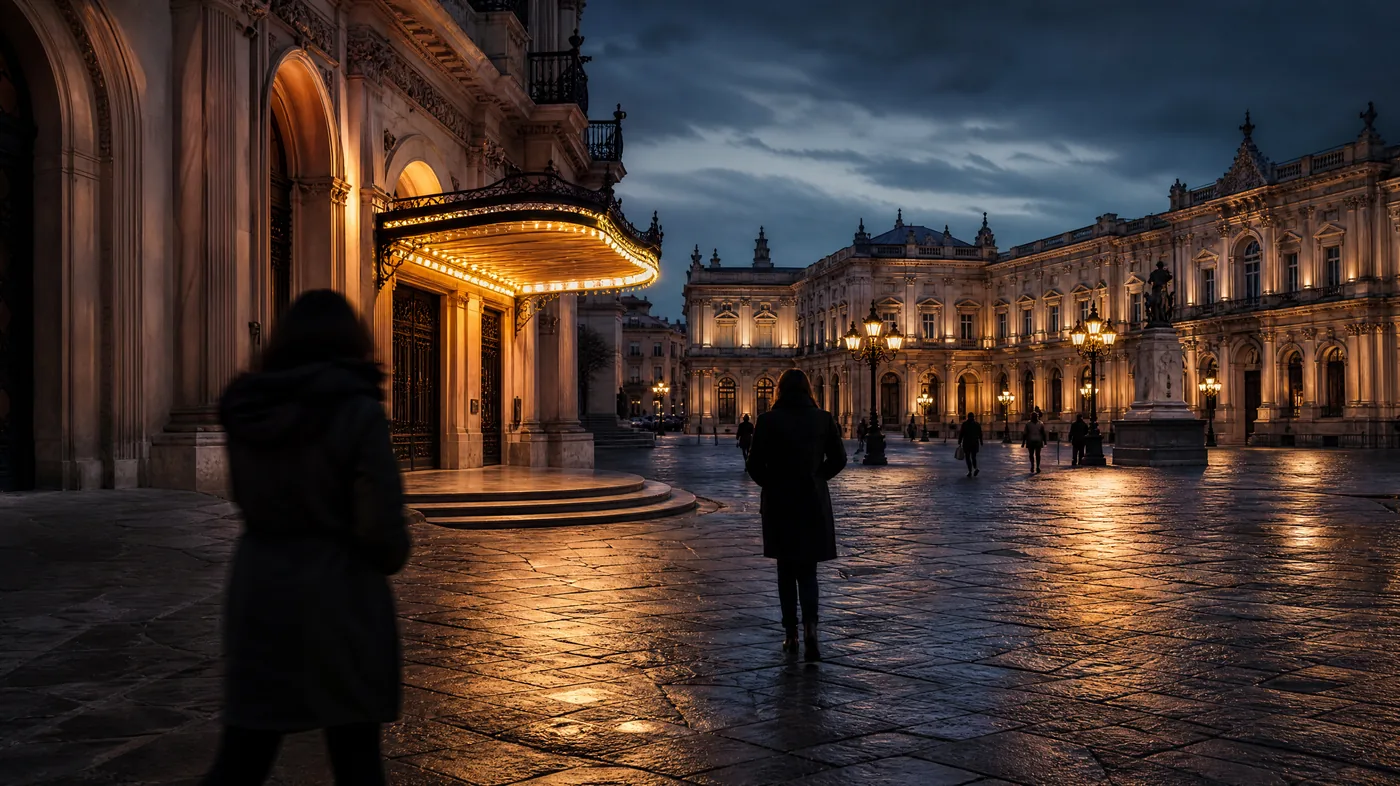
Booking choice: The City Highlights walk, from $13 per person. Check dates Tour details
On the evening of 31 May 1890, a crowd filled a new hall in the center of Catania to hear Norma, the masterpiece of Vincenzo Bellini, a son of the city. The hall was lit by flickering orange gas flames shaped like butterflies, the theatre's own history recalls. That night ended a story that had started a century earlier, after an earthquake.
This guide follows it: why the theatre bears Bellini's name, what stood on the site before, how Carlo Sada built it, the ceiling and the curtain, the great singers, the way the house has been run, and the 2026 works that prepare it for its reopening in March 2027.
The quick answer
The Teatro Massimo Bellini was designed by the Milanese architect Carlo Sada and opened on 31 May 1890 with Bellini's Norma. A first theatre on the site was begun in 1812 but never finished, and a provisional city theatre served from 1822. Today a regional opera company runs it; after safety works in 2026 it reopens in March 2027.
Why is it called the Teatro Massimo Bellini?
It honors Vincenzo Bellini, the composer born in Catania in 1801. "Massimo" means the greatest: it was to be the city's main theatre.
Bellini was born in Catania on 3 November 1801 and died in Puteaux, near Paris, on 23 September 1835, aged 33. In a short life he wrote Il pirata, La sonnambula, Norma and I puritani, operas built on long, graceful melodies. His remains came home in 1876 and lie in Catania Cathedral.
When the city finally had its big opera house, naming it after him was the obvious choice, and opening it with Norma, the opera of "Casta diva", sealed it. The theatre's history pages speak of the long-desired "Massimo", the largest theatre Catania had wanted since the 18th century.
More about the man, his tomb and his birthplace museum is in our guide to Bellini in Catania.
What stood there before the Teatro Massimo Bellini?
An unfinished theatre. A first stone was laid in 1812 on Piazza Nuovaluce, on the site of today's house, but the money ran out, and a provisional city theatre opened elsewhere in 1822.
The idea of a public theatre goes back to the rebuilding of Catania after the earthquake of 1693. Only in 1812 did work start: the architect Salvatore Zahra Buda began a "Gran Teatro Municipale" on Piazza Nuovaluce, facing the monastery of Santa Maria di Nuovaluce. The plan was grand, one of the most innovative in Italy. The funds were then moved to an outer harbor wall, judged more urgent for defense, and the building stopped.
In the meantime the city senate opened a smaller Teatro Comunale Provvisorio in 1822, in a former warehouse in the Marina district. It served for over a century and was destroyed by bombing in 1943, never to be rebuilt.
The half-built Nuovaluce theatre became a multi-purpose hall, the Arena Pacini, used mostly in summer. In 1865 the area was sold to private owners to pay for a proper new theatre.
See the square that took a century to fill, on a guided walk through the old town.
Check dates for the City Highlights walkWho built the Teatro Massimo Bellini?
The Milanese architect Carlo Sada, who took over the project of the theatre architect Andrea Scala. The city paid most of the cost, about one million lire of the time.
In 1870 Andrea Scala was asked to find a site. The debate was long: Piazza Stesicoro, Piazza Cutelli, Via Lincoln (today's Via Antonino di Sangiuliano) and Piazza Cavour were all considered. Piazza Cutelli won, then money stopped the plan again. A company of shareholders, the Società Anonima del Politeama, then backed Scala's design for a multi-purpose Politeama on the old site, with Carlo Sada assisting.
When the company ran short of funds, the city took over. A council commission decided to finish the building as an opera house, and Sada reworked the design. In 1880 the city set aside 605,000 lire, and this time the works ran smoothly: in about seven years the theatre was finished.
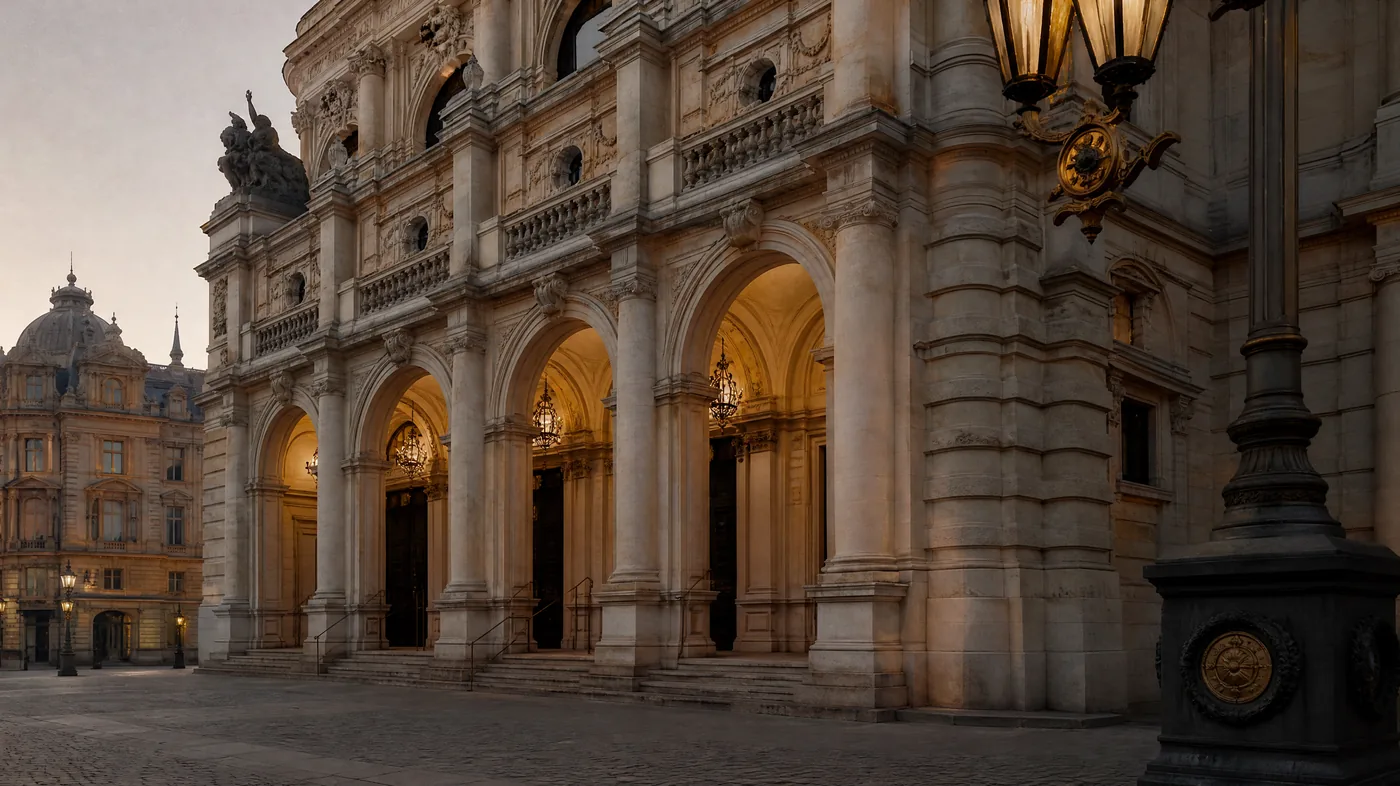
The style follows Charles Garnier's opera house in Paris, the eclectic look of France's Second Empire. The facade is full of ornaments and allegories, and the entrance has a portico for carriages closed by iron gates.
When did the Teatro Massimo Bellini open?
On 31 May 1890, with Bellini's Norma. The building had been ready for three years, but the opening waited for funds and for the end of a cholera epidemic.
The theatre's history explains the delay. When the house was finished, the money promised to the impresario who was to run it did not arrive, and a cholera epidemic turned the city's attention to public health. The hall stood ready and empty until the spring of 1890.
The first night made up for it: Norma, the gas lights shaped like butterflies, and a city celebrating its composer in his own theatre. The next decade was quieter. Things picked up in the early 1900s under the impresario Giuseppe Cavallaro and with the verismo operas, Tosca, Fedora and Andrea Chénier.
After the First World War the house came back in 1918 with a program of fourteen operas.
What should you look for in the hall?
Ernesto Bellandi's ceiling, with Bellini's apotheosis and his heroines; Giuseppe Sciuti's historic curtain; and the marble foyer, the Ridotto, with a bronze statue of Bellini.
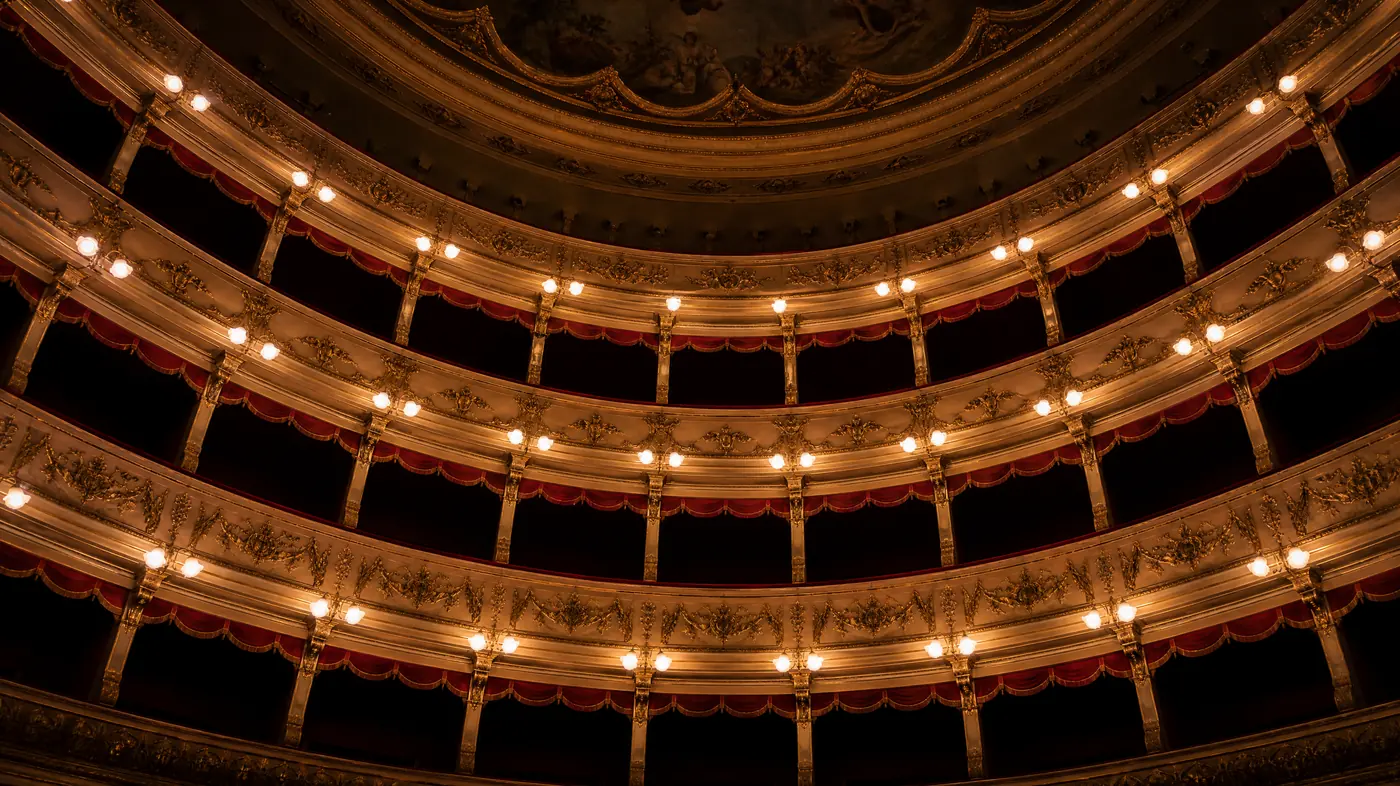
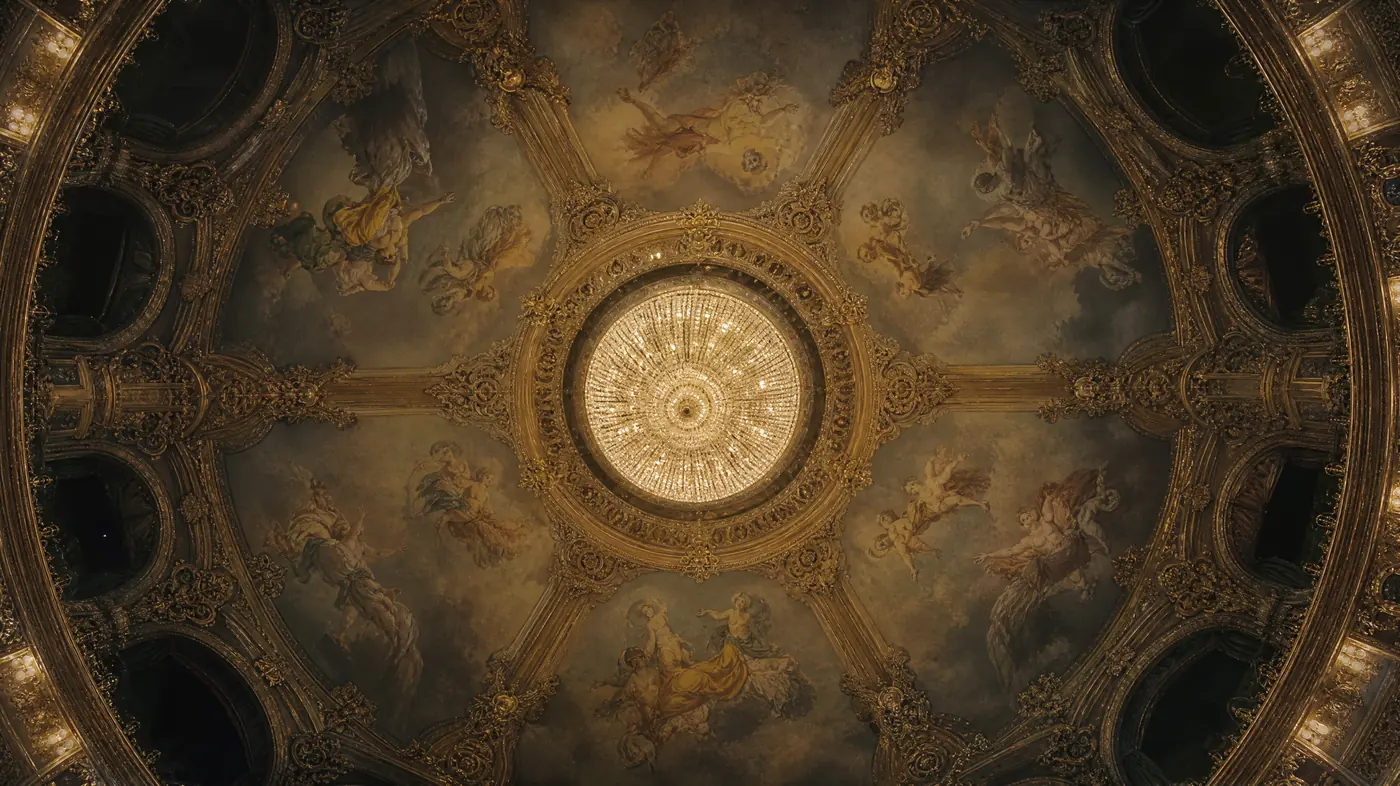
Look up first. Bellandi painted the ceiling with the apotheosis of Bellini, surrounded by allegories of four of his operas: Norma, La sonnambula, I puritani and Il pirata. Below it the horseshoe of red plush and gilded boxes is one of the richest halls built in 19th-century Italy, the Italian Wikipedia article says.
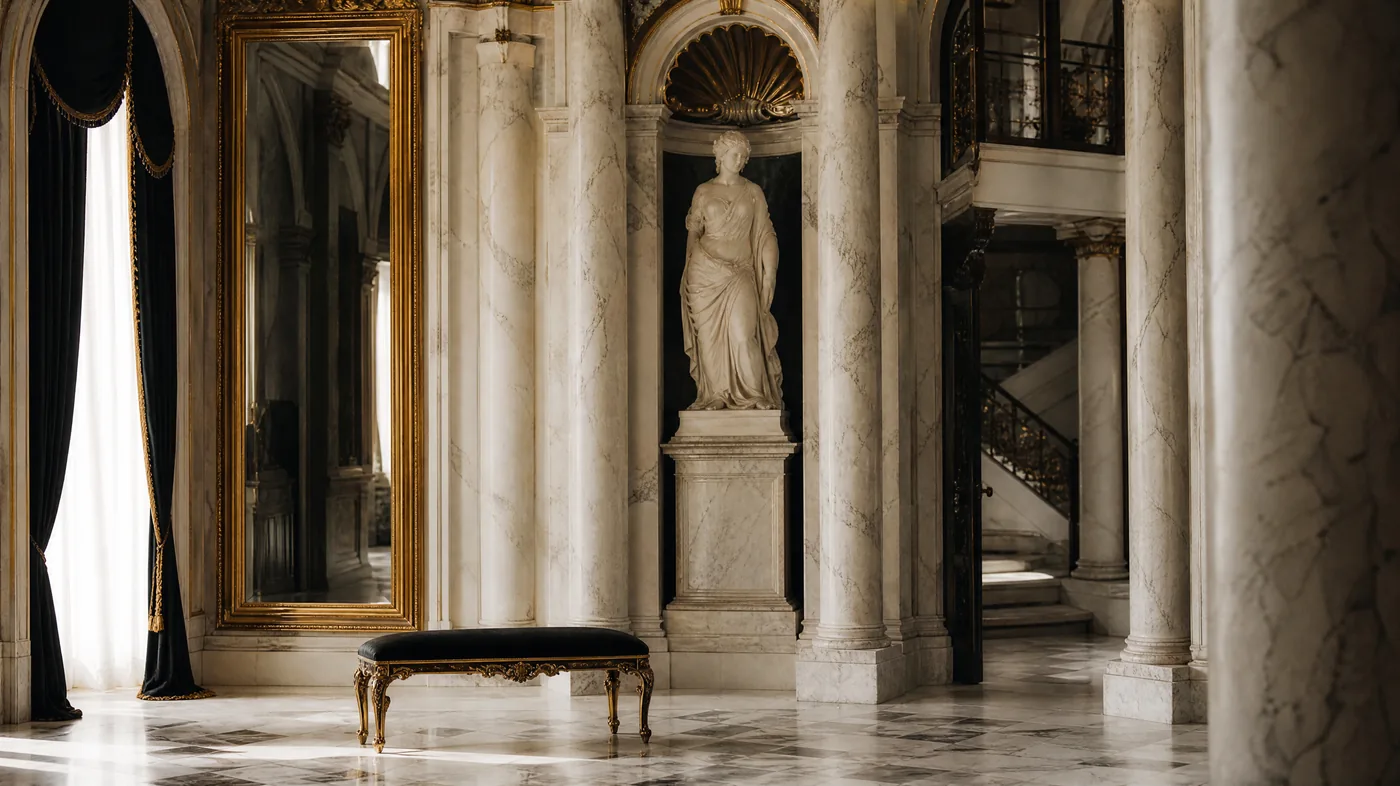
The historic curtain by the Catania painter Giuseppe Sciuti shows the Victory of the Catanese over the Libyans, an episode from the city's ancient past. In the Ridotto, all marble and stucco, the bronze statue of Bellini by Salvo Giordano stands between the central arches.
Guided tours of the house are suspended during the 2026 works. When they resume, they normally cover the stalls, the box tiers, the foyer and the gallery. More in our visiting guide.
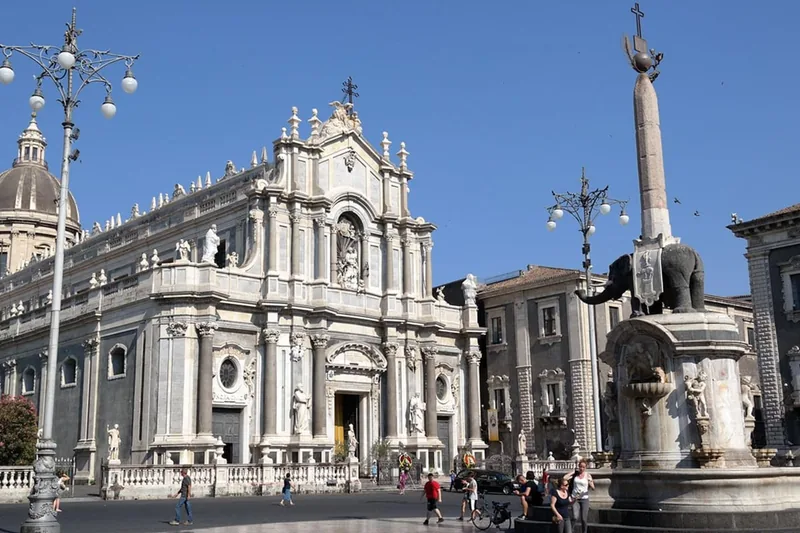
Baroque Catania on foot with a local guide: the Duomo, Via Gesuiti, the Alessi steps and Piazza Vincenzo Bellini.
Explore the City Highlights walk Tour detailsWhich great singers and conductors have performed here?
Maria Callas, Toti Dal Monte, Montserrat Caballé, Renata Scotto and many more, with conductors such as Georg Solti, Lorin Maazel, Riccardo Muti and Giuseppe Sinopoli.
The 1930s were a golden age. In 1935, for the centenary of Bellini's death, Gina Cigna sang Norma. In 1941 Toti Dal Monte appeared in Don Pasquale, and a young tenor named Mario Del Monaco sang in La bohème. The war closed the theatre. It reopened in 1944, and the decade that followed brought Beniamino Gigli and Renata Tebaldi.
In 1951, for the 150th anniversary of Bellini's birth, Maria Callas sang Norma here, and she came back in 1952 and 1953. In 1955 the new President of Italy, Giovanni Gronchi, opened the season with I puritani. Francis Poulenc called the 1959 staging of his Dialogues of the Carmelites the best his opera had had, and Igor Stravinsky gave a concert in 1963 that he dedicated to the memory of John F. Kennedy.
Renata Scotto sang Bellini's rarely heard Zaira here in 1976, its first staging of the century. The theatre's list of names also includes Mirella Freni, Luciano Pavarotti and Giuseppe Di Stefano.
Who runs the Teatro Massimo Bellini?
A regional public body, the Ente Lirico Regionale Teatro Massimo Bellini. The superintendent is Giovanni Cultrera di Montesano, the artistic director Fabrizio Maria Carminati, and the board is chaired by the mayor of Catania.
The house has changed hands many times. Private theatre companies ran it in the early years. In 1936 the city missed the chance, under a new national law, to make it an ente lirico (a state-recognized opera company). After the war the mixed public and private Ente Musicale Catanese took over, and in 1966 the city of Catania ran it directly.
In 1986 a law of the Sicilian Region made it an Ente Autonomo Regionale. A move to turn it into a foundation began in 2002, and in April 2007 the Sicilian Regional Assembly brought it back by law as an Ente Lirico Regionale. The company also owns the Teatro Sangiorgi, which it restored and reopened in 2002 as its second hall.
Today the board is chaired by the mayor of Catania, Enrico Trantino. The orchestra has 105 players and the chorus 84.
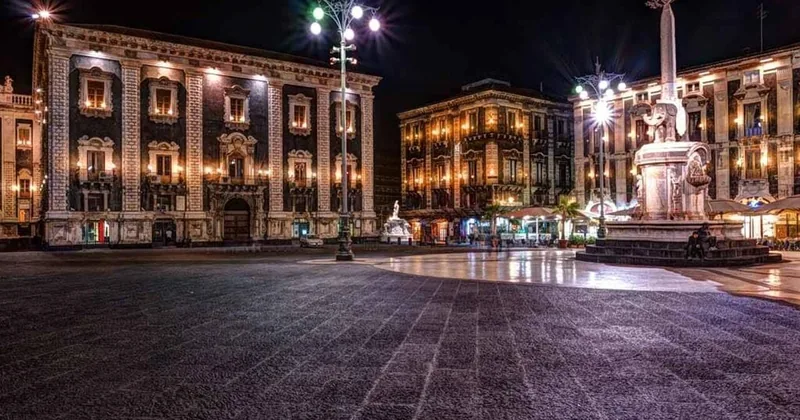
Walk the evening streets to the theatre's square and the Bellini monument with a licensed guide.
Check dates for the evening walkWhy is the theatre closed in 2026, and when does it reopen?
For safety works from 11 May to 31 December 2026. The historic house reopens in March 2027 with Verdi's Nabucco, from 6 to 14 March 2027.
The work covers fire safety and escape routes: a new emergency exit at the top of the house, REI fire doors and glazing, smoke protection, hydrants and sprinklers. The region put 1.3 million euros into it. A separate restoration of the facade, worth 3.3 million euros, and nearly 4 million euros for the interiors were also announced. The superintendent spoke of making up for four decades of difficulty.
The last concert in the house before the works was on 9 May 2026. Since then the season has continued at the Teatro Metropolitan and the Teatro Sangiorgi, and BeSicily reports that audiences still grew. At the presentation of the 2027 season on 24 November 2026, Mayor Trantino called reopening "Sada's hall" one of the strongest emotions of his term.
The 2027 season brings seven productions back to the house, with La sonnambula opening on 23 September 2027, the anniversary of Bellini's death. Dates and tickets are in our reopening post and our tickets guide.
Frequently asked questions
Who designed the Teatro Massimo Bellini?
The Milanese architect Carlo Sada, who completed and reworked an earlier project by Andrea Scala.
When was the Teatro Massimo Bellini built?
The final building works took about seven years, and the theatre opened on 31 May 1890 with Bellini's Norma.
Is the Teatro Massimo Bellini the same as the Teatro Massimo?
No. The Teatro Massimo Bellini is Catania's opera house, named after Vincenzo Bellini. Palermo's Teatro Massimo is a different house.
Can you visit the Teatro Massimo Bellini?
Guided tours are suspended during the 2026 works, and the theatre will announce on its website when they resume. The house itself reopens in March 2027.
Ready to book
Choose your tour
Free cancellation up to 24 hours before on every option. Prices are from-prices in USD and move with the season.
Catania City Highlights Walking Tour
- A local guide for two hours
- Piazza Duomo, the Pescheria and Ursino Castle
- Piazza Università and Piazza Vincenzo Bellini
Catania by Night: Baroque and History Walk
- An official licensed tour leader
- Two hours through the lit old town
- Piazza Teatro Massimo and the Bellini monument